

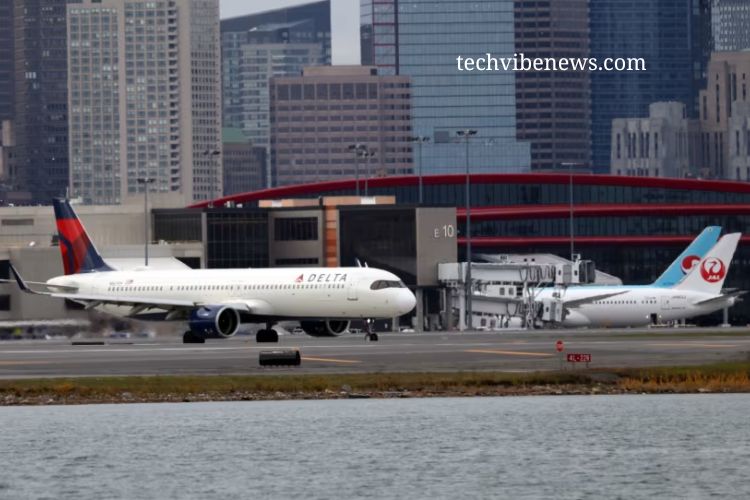
Federal aviation authorities have launched an investigation into a serious runway close call involving two commercial aircraft at Boston Logan International Airport. The Federal Aviation Administration (FAA) and the National Transportation Safety Board (NTSB) are reviewing the circumstances surrounding the incident, which occurred Saturday morning and raised fresh concerns about runway safety.
The incident involved Delta Air Lines Flight 2351 and American Airlines Flight 3161, which came dangerously close while operating on intersecting runways. Although no injuries occurred and both flights completed their operations safely, the event highlighted the importance of strict air traffic control procedures and quick pilot decision-making during critical moments.
Read More: The Devastating Price of the Iran War: Thousands of Lives Lost and Billions in Financial Damage
Delta Flight Performs Emergency Go-Around to Avoid Conflict
According to flight tracking information, Delta Air Lines Flight 2351 was approaching Boston Logan for landing at approximately 11:30 a.m. when pilots noticed a potential conflict involving American Airlines Flight 3161. The American Airlines aircraft was accelerating for takeoff on an intersecting runway, creating a situation that required immediate action.
Delta’s pilots responded by performing a go-around maneuver, a standard aviation safety procedure that involves abandoning a landing attempt and climbing back into the air. The Airbus A319 successfully regained altitude, followed further instructions from air traffic controllers, and later landed safely.
Delta confirmed that passengers exited the aircraft normally after landing, and no injuries or disruptions were reported. The airline emphasized that the pilots followed proper safety procedures to manage the situation.
Aircraft Came Within Hundreds of Feet During Runway Encounter
Flight tracking analysis indicated that the two aircraft came within several hundred feet of each other during the incident. While the exact distance remains part of the ongoing investigation, the close proximity has drawn attention from aviation experts and safety officials.
Air traffic control recordings revealed that a controller questioned the departing American Airlines aircraft about its destination after the situation unfolded. The pilot responded that the aircraft had received clearance for takeoff. American Airlines directed further questions regarding the incident to the FAA.
Investigators are now examining communication between pilots and controllers, runway procedures, aircraft movements, and other factors that may have contributed to the close call.
FAA and NTSB Examine Possible Safety Concerns
The FAA and NTSB investigations aim to determine how the runway conflict developed and whether any procedural improvements are needed. Aviation investigations typically analyze multiple elements, including air traffic control instructions, pilot responses, airport layout, and communication systems.
Boston Logan International Airport operates multiple runways that handle thousands of flights each year. Intersecting runways require careful coordination because aircraft movements must be precisely timed to avoid conflicts.
Aviation experts explain that runway incursions, where aircraft or vehicles unintentionally enter an active runway area, remain a major focus for safety agencies. Although modern aviation systems include multiple safety layers, rare incidents like this demonstrate why constant monitoring and improved procedures are essential.
Understanding the Go-Around Safety Maneuver
A go-around is a common aviation procedure designed to protect passengers and aircraft when a landing cannot be completed safely. Instead of continuing toward the runway, pilots increase engine power, climb away from the airport, and follow new instructions from air traffic control.
Passengers often find go-arounds surprising because they may feel like the aircraft is suddenly rising after beginning its descent. However, pilots regularly train for these situations and consider them an important part of safe flying.
Michael McCormick, a former FAA air traffic manager and aviation expert, previously explained that go-arounds are routine and happen frequently across airports in the United States. Pilots practice the maneuver repeatedly in flight simulators to ensure they can respond quickly during unexpected situations.
Reasons for a go-around can include runway conflicts, sudden weather changes, strong winds, unstable approaches, or obstacles near the landing area. The procedure allows pilots to create additional time and distance while maintaining full control of the aircraft.
Recent Aviation Incidents Increase Safety Discussions
The Boston Logan close call comes during a period of increased public attention toward aviation safety. Recent years have seen several high-profile aviation incidents, including serious crashes, turbulence-related events, and investigations into other aircraft near-miss situations.
Despite these incidents, aviation remains one of the safest forms of transportation worldwide. Experts emphasize that modern aviation relies on strict regulations, advanced technology, extensive pilot training, and detailed safety checks.
Many incidents that attract public attention are prevented from becoming disasters because pilots, controllers, and safety systems work together to identify risks and respond quickly.
Importance of Pilot Training and Air Traffic Coordination
The Boston incident also highlights the critical role of communication between pilots and air traffic controllers. Every aircraft movement at a busy airport depends on accurate instructions and constant coordination.
Pilots are trained to prioritize safety above all else and are authorized to take immediate action when they believe a situation could become dangerous. In this case, Delta’s decision to perform a go-around prevented a potentially serious runway conflict.
Air traffic controllers also play a key role in managing complex airport operations. Their responsibilities include monitoring aircraft positions, issuing clearances, and ensuring safe separation between arriving and departing flights.
Investigators will likely review whether communication issues, timing errors, or misunderstandings contributed to the event.
Airport Safety Measures Continue to Improve
Following aviation incidents, authorities often evaluate existing safety systems and consider improvements. Airports across the United States continue investing in upgraded technology, improved runway monitoring tools, and enhanced communication systems to reduce risks.
Technological advancements, including improved tracking systems and automated safety alerts, have helped prevent many potential accidents. However, experts note that human decision-making and effective teamwork remain essential components of aviation safety.
The FAA and NTSB findings from the Boston Logan investigation could provide additional recommendations to further strengthen runway operations and prevent similar incidents in the future.
Frequently Asked Questions:
What happened at Boston Logan International Airport?
A near-miss incident occurred at Boston Logan International Airport when two commercial aircraft came dangerously close while operating on intersecting runways. A Delta Air Lines flight preparing to land performed a go-around after an American Airlines aircraft began takeoff operations on a crossing runway.
Which flights were involved in the Boston Logan runway incident?
The incident involved Delta Air Lines Flight 2351 and American Airlines Flight 3161. Delta’s Airbus A319 was approaching for landing, while the American Airlines aircraft was accelerating for takeoff.
Why did Delta’s pilots perform a go-around maneuver?
Delta pilots performed a go-around as a safety precaution after recognizing a potential runway conflict. The maneuver allowed the aircraft to climb away from the runway and avoid a possible collision risk.
Did the two aircraft collide during the incident?
No, the two aircraft did not collide. The Delta flight safely aborted its landing attempt, and both aircraft continued their operations without injuries or reported damage.
How close did the two planes come to each other?
Flight tracking data suggested that the two aircraft came within several hundred feet of each other. Authorities are reviewing all available information to determine the exact details of the event.
Why are the FAA and NTSB investigating the incident?
The FAA and NTSB are investigating to understand how the runway conflict occurred and whether improvements are needed in air traffic control procedures, communication, or airport safety systems.
What is a go-around in aviation?
A go-around is a safety procedure where pilots discontinue a landing attempt and climb back into the air. It is used when landing conditions are unsafe, including runway conflicts, weather problems, or unstable approaches.
Conclusion
The shocking near-miss at Boston Logan International Airport highlights the critical importance of quick decision-making, effective communication, and strict aviation safety procedures. Although two aircraft came dangerously close on intersecting runways, the situation was safely managed due to the Delta pilots’ timely go-around maneuver and the safeguards built into modern aviation operations. As the FAA and NTSB continue their investigation, the findings could help identify potential improvements in air traffic control coordination and runway management. While incidents like this attract significant attention, they also demonstrate how training, technology, and safety protocols work together to protect passengers. prevent future risks.