

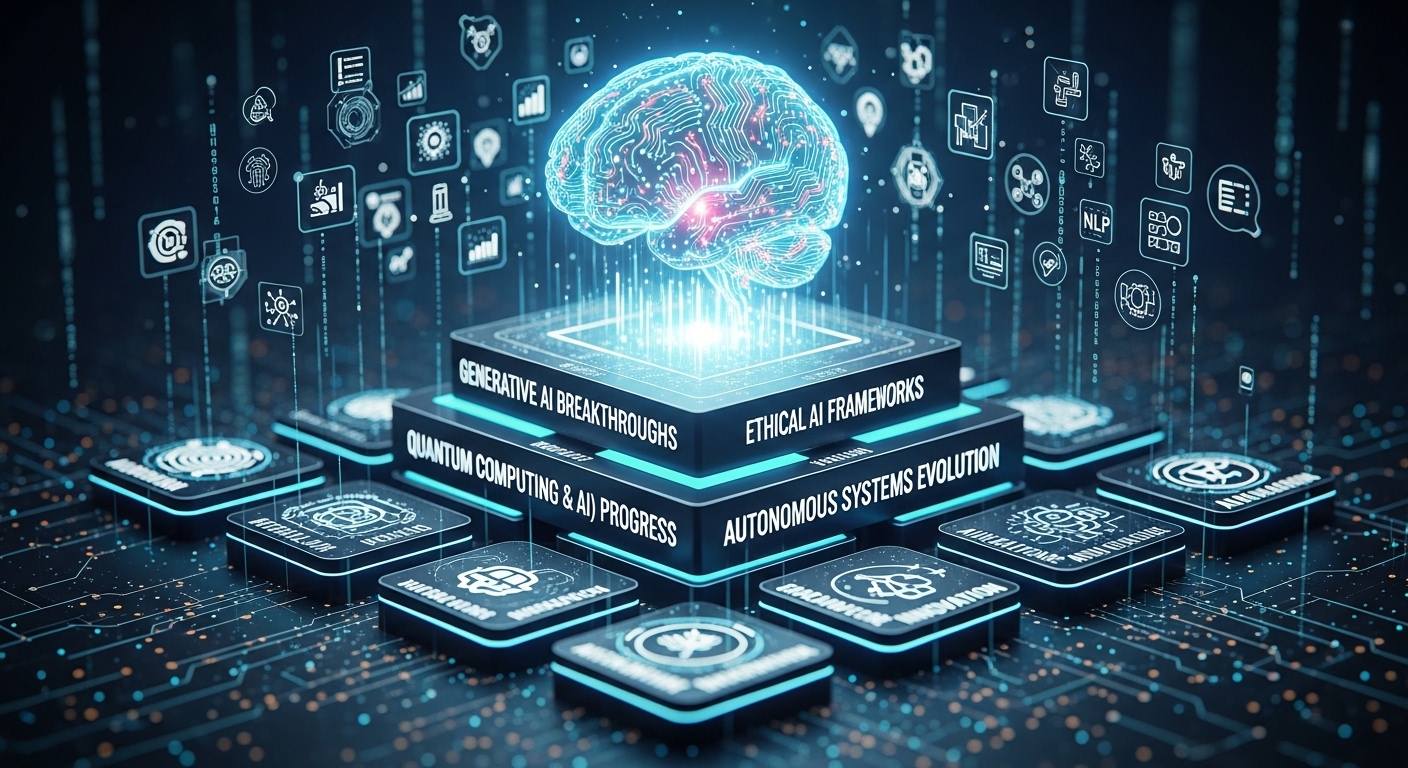
Artificial intelligence in 2026 is evolving at an unprecedented speed, reshaping industries, governments, and daily life. Recent updates highlight the rise of agentic AI systems, stronger cybersecurity integration, global regulation debates, and rapid adoption across business sectors. AI is no longer just a tool but becoming an autonomous decision-making system influencing global digital ecosystems and economic structures worldwide today.
Artificial Intelligence Breakthroughs and Innovations
Rise of Agentic AI Systems
Agentic AI systems are becoming a major breakthrough in 2026, enabling machines to perform complex tasks independently without constant human instructions. These systems can plan, execute, and adapt workflows across industries such as healthcare, logistics, and finance, transforming automation and digital productivity at a global scale today.
AI Self-Improvement and Intelligence Expansion
New research suggests AI systems are beginning to assist in improving their own development processes, raising discussions about “intelligence explosion” and recursive self-improvement. Experts believe this could dramatically accelerate innovation while also increasing concerns about control, safety, and unpredictable system behavior in the future AI landscape.
AI in Enterprise Automation Growth
Businesses are rapidly integrating AI into operations such as coding, scheduling, data analysis, and workflow automation. Governments and enterprises are using AI tools to improve productivity and reduce costs, making AI a core driver of digital transformation across global industries in 2026.
AI in Scientific Research Acceleration
AI is increasingly used in scientific discovery, helping researchers analyze complex datasets, simulate experiments, and identify new patterns in medicine and physics. This acceleration is reducing research timelines and enabling breakthroughs that were previously impossible with traditional computational methods.
Expansion of Multimodal AI Models
Multimodal AI systems that process text, images, audio, and video simultaneously are improving significantly. These models are powering smarter assistants, creative tools, and enterprise applications, making AI more versatile and useful across multiple industries and digital environments.
AI in Cybersecurity and Digital Defense
AI-Powered Cyber Defense Systems
AI is now a critical part of cybersecurity strategies, helping detect threats, block attacks, and respond to incidents in real time. Governments and companies are relying on AI-driven security platforms to protect critical infrastructure from increasingly complex cyber threats worldwide today.
Rise of AI-Based Cyberattacks
Cybercriminals are also using AI to launch more advanced phishing attacks, malware campaigns, and automated hacking attempts. These attacks are becoming harder to detect, forcing cybersecurity systems to evolve rapidly in response to AI-powered threats across global networks today.
Zero-Trust Security Models Expansion
Organizations are adopting zero-trust frameworks where no user or device is automatically trusted. Every access request is verified continuously, improving protection against internal and external threats in highly connected digital systems.
Government AI Security Policies
Governments are developing new policies to regulate AI use in cybersecurity, focusing on transparency, ethical use, and national security protection. These policies aim to balance innovation with safety in critical digital infrastructure.
Cloud AI Security Enhancement
Cloud platforms are strengthening AI-based monitoring systems to detect unusual behavior and prevent data breaches. These improvements are essential as businesses increasingly rely on cloud infrastructure for global operations.
AI in Consumer Technology and Devices
AI Integration in Smartphones
Smartphones are becoming more intelligent with built-in AI assistants that manage tasks, optimize performance, and enhance user experience. AI-powered cameras, translation tools, and predictive apps are now standard features in modern mobile devices.
AI-Powered Operating Systems
Operating systems are increasingly using AI to personalize user interfaces, automate tasks, and improve system efficiency. These updates allow devices to learn user behavior and adapt dynamically to improve productivity.
Wearable AI Health Monitoring
Wearable devices now use AI to track health metrics such as heart rate, sleep patterns, and physical activity. These insights help users make better lifestyle decisions and improve overall wellness.
Smart Home AI Automation
AI is powering smart homes with automated lighting, security systems, and energy management. Devices communicate with each other to create efficient and intelligent living environments.
AI in Entertainment Devices
Streaming platforms, gaming consoles, and media apps are using AI to recommend personalized content and enhance user engagement through predictive algorithms.
AI in Business and Industry Transformation
AI-Driven Corporate Growth
Companies are using AI to improve decision-making, forecast market trends, and optimize operations. This is increasing efficiency and profitability across industries globally.
AI in Financial Services
Banks and financial institutions are using AI for fraud detection, risk analysis, and automated trading systems, improving accuracy and reducing operational risks.
AI in Manufacturing Automation
Factories are adopting AI-powered robotics to increase production speed, reduce errors, and improve supply chain efficiency in industrial operations.
AI in Marketing and Advertising
Businesses are using AI to analyze consumer behavior, personalize ads, and improve customer targeting strategies across digital platforms.
AI Workforce Transformation
AI is reshaping job markets by automating repetitive tasks while increasing demand for skilled professionals in technology and data science fields.
AI Ethics, Regulation, and Global Policy
Global AI Regulation Development
Countries are working on regulatory frameworks to ensure safe, ethical, and transparent use of artificial intelligence in critical sectors.
AI Safety and Risk Management
Experts are focusing on reducing risks related to autonomous decision-making systems, ensuring human oversight remains central in high-impact AI applications.
AI Transparency and Accountability
Governments and organizations are emphasizing transparency in AI systems to ensure fairness, reduce bias, and build public trust.
International AI Collaboration
Countries are collaborating on AI research and policy development to manage global risks and promote responsible innovation.
Ethical AI Development Standards
Tech companies are adopting ethical guidelines to ensure AI systems are developed responsibly and align with human values.
AI Future Trends and Predictions
Fully Autonomous AI Systems
Future AI systems will operate with minimal human intervention, handling complex workflows and decision-making processes independently.
Human-AI Collaboration Expansion
AI will increasingly work alongside humans, enhancing productivity and creativity across industries.
AI-Driven Smart Cities
Cities will use AI for traffic management, energy efficiency, and public safety systems.
AI in Education Transformation
Education systems will use AI tutors, personalized learning, and automated assessment tools.
Continuous AI Evolution
AI will continue evolving rapidly, shaping every aspect of digital life and global economies.
FAQs
What is the biggest AI trend in 2026?
Agentic AI and autonomous systems are the biggest trends.
How is AI used in cybersecurity?
It detects threats and prevents cyberattacks in real time.
What are agentic AI systems?
They are AI systems that can perform tasks independently.
Is AI replacing jobs?
AI is automating tasks but also creating new tech jobs.
What is the future of AI?
It will become more autonomous, integrated, and intelligent.
Conclusion (60 words)
AI updates in 2026 show rapid progress in automation, cybersecurity, business transformation, and autonomous systems. Artificial intelligence is becoming more independent, powerful, and widely adopted across industries. While it brings innovation and efficiency, it also raises ethical and safety concerns. The future of AI will depend on responsible development, regulation, and balanced human-machine collaboration worldwide moving forward.
