

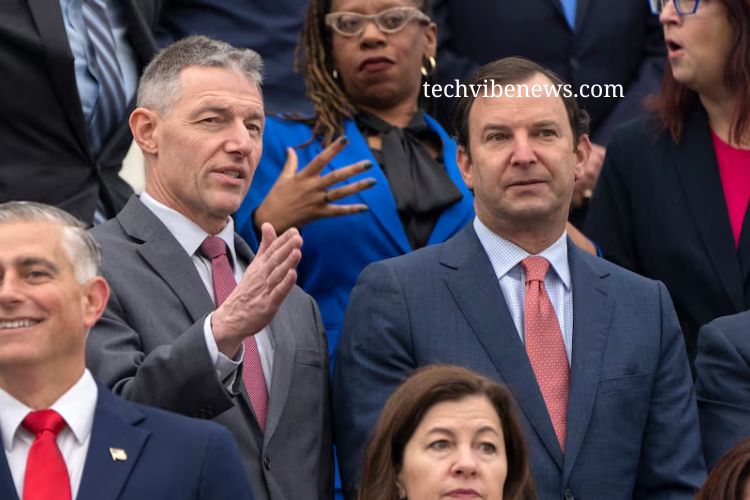
Utah Rep. Mike Kennedy has quickly established himself as a results-focused member of Congress, using his background in medicine, law and state politics to shape a practical approach to legislation. Rather than concentrating solely on political debate, Kennedy has emphasized productivity, bipartisan cooperation and policies designed to address issues affecting Utah residents and the broader United States.
With six months remaining in his first two-year congressional term, Kennedy has earned recognition as one of the most productive members of his freshman class. During his first 18 months in Congress, he introduced 36 bills, with six successfully passing through the House of Representatives.
His legislative agenda covers a broad range of issues, including energy development, public lands, wildfire prevention, healthcare access, drug safety and infrastructure. Kennedy serves on three House committees that closely connect with these priorities: the Committee on Natural Resources, the Committee on Science, Space and Technology, and the Committee on Transportation and Infrastructure.
Read More: Breaking: Israel-Hezbollah Ceasefire Shattered as U.S. Politics Intensify and Ebola Fears Resurface
Mike Kennedy Focuses on Results Over Political Theater
Kennedy’s approach to Congress reflects his professional experience and his belief that lawmakers can achieve meaningful results by finding common ground. He has emphasized bipartisan cooperation as a practical way to advance legislation, particularly when bills address issues that directly affect communities.
One of his priorities involves wildfire prevention and research. Kennedy has supported legislation designed to strengthen wildfire research capabilities in Utah. His work on the Wildfire Research Institute Act seeks to provide the state with greater opportunities to conduct research and develop strategies for preventing and managing devastating wildfires.
Wildfires remain a serious concern across the American West, where changing environmental conditions and expanding communities have increased the importance of preparation and prevention. Kennedy’s focus on research demonstrates his interest in finding long-term solutions rather than simply responding after disasters occur.
Healthcare and Drug Safety Remain Major Priorities
Kennedy’s medical background strongly influences his legislative priorities. As a family physician, he has spent years working directly with patients and families, giving him firsthand experience with challenges within the American healthcare system.
One area he has addressed is the risk associated with multiple medications. Combining certain medicines can increase the danger of respiratory complications and other serious health problems. Kennedy has worked on legislation intended to improve the accuracy of prescription drug databases so healthcare professionals can better understand a patient’s medication history.
The initiative reflects Kennedy’s belief that better information can help doctors make safer decisions. By improving access to accurate prescription records, lawmakers can potentially reduce medication-related risks and contribute to better patient outcomes.
His collaboration with Utah physician and state representative Ray Ward also highlights Kennedy’s willingness to draw on his medical background while working with colleagues who understand healthcare challenges from both professional and legislative perspectives.
Geothermal Energy and America’s Energy Future
Energy represents another important part of Kennedy’s congressional agenda. He has advocated for energy sources that are affordable, reliable, clean and capable of being deployed at scale.
Geothermal energy has emerged as one of his areas of interest. Kennedy has worked with Sen. John Curtis to expand opportunities for geothermal development and encourage greater use of this resource.
Geothermal energy uses heat from beneath the Earth’s surface to generate power. Supporters view it as a potentially reliable source of electricity because it does not depend on sunlight or wind conditions in the same way as solar and wind power.
Kennedy’s interest in geothermal energy fits into a broader effort to strengthen America’s energy infrastructure while supporting reliable power production. His focus also reflects Utah’s significant natural resources and its potential role in developing new energy technologies.
The License to Drill Act and Energy Infrastructure
Kennedy has also backed the License to Drill Act, legislation designed to improve the federal permitting process for energy projects.
Permitting delays have long been a major concern for energy producers and infrastructure developers. Kennedy argues that government agencies need to complete necessary permits efficiently so important projects can move forward.
The legislation passed the House through unanimous consent, demonstrating broad support among lawmakers at that stage. Its future progress depends on action in the Senate.
For Kennedy, improving the permitting system is part of a larger strategy to expand energy infrastructure and encourage domestic production. He has presented the issue as one of efficiency, reliability and economic strength.
A Unique Background Shapes Kennedy’s Political Approach
Kennedy brings an unusual combination of professional experiences to Washington. Before entering Congress, he worked as a family physician, attorney, state representative and state senator.
Each role has contributed to the way he approaches public policy.
His medical career taught him to focus on individual people, families and practical solutions. As a physician, Kennedy says his primary goal was to help patients become healthier and more complete individuals.
His legal career provided a different perspective. Working as an attorney strengthened his understanding of laws, constitutional principles and the institutional framework governing American society.
His experience in state politics then gave him an understanding of how legislation works in practice.
Together, these experiences have shaped a congressional philosophy centered on problem-solving. Instead of viewing every issue through a strictly political lens, Kennedy often approaches legislation by asking what practical outcome it can produce.
A Broader View of National and International Issues
Kennedy has acknowledged that serving in Congress has expanded his understanding of national and international affairs.
Before entering federal office, his professional responsibilities largely centered on medicine, law and state-level issues. His congressional role has exposed him to a much wider range of challenges, including relations with China, Russia and Ukraine, as well as conflicts and geopolitical developments involving the Middle East.
He has also become more engaged with issues surrounding major international infrastructure and strategic assets, including the Panama Canal.
This broader perspective illustrates one of the major differences between state and federal office. Members of Congress must consider not only local concerns but also national security, international relations, trade, energy policy and America’s position in the global economy.
Utah Remains at the Center of His Work
Despite his growing involvement in national issues, Kennedy continues to emphasize his responsibility to Utah.
His legislation on wildfire prevention, energy, healthcare and public lands connects directly with challenges facing the state. Utah’s geography and natural resources make issues such as land management, energy development and wildfire prevention particularly important.
Kennedy’s committee assignments also give him opportunities to influence policies affecting Utah’s economy and environment.
His approach reflects an effort to balance local responsibilities with the broader demands of federal office. As a representative, he must respond to Utah voters while participating in decisions that affect millions of Americans.
Faith, Family and Public Service
Kennedy has also connected his public service to his personal values and family responsibilities. As a father of eight children and grandfather of 12 grandchildren, he views his congressional work partly through the lens of future generations.
That perspective influences the way he talks about public responsibility. Kennedy has expressed a desire to leave a stronger future for his family, his state and the country.
His comments about Christianity similarly emphasize personal growth, hope and the responsibility to become better over time. For Kennedy, faith is closely connected to the idea of improvement and service.
These beliefs appear to complement his broader political philosophy: government should not simply produce arguments but should help create meaningful improvements in people’s lives.
The Future of Mike Kennedy’s Congressional Career
Kennedy’s first congressional term has been marked by an emphasis on legislation and measurable productivity. Introducing dozens of bills and moving several through the House has helped establish his reputation as an active freshman lawmaker.
His remaining time in the term could provide opportunities to advance his priorities further, particularly in energy, healthcare, infrastructure and public lands.
The challenge, however, extends beyond introducing legislation. Passing bills through the House is only one stage of the process. Successful legislation must also navigate the Senate and ultimately receive the necessary approval to become law.
Kennedy’s emphasis on bipartisan cooperation could prove important as he attempts to move additional proposals forward.
Frequently Asked Questions:
Who is Mike Kennedy?
Mike Kennedy is a Utah Republican serving in the U.S. House of Representatives. Before entering Congress, he worked as a family physician, attorney, state representative, and state senator.
What makes Mike Kennedy’s political strategy different?
Kennedy emphasizes productivity, practical solutions, and bipartisan cooperation. He has focused on building common ground to move legislation forward rather than relying solely on partisan politics.
How many bills has Mike Kennedy introduced?
During his first 18 months in Congress, Kennedy introduced 36 bills, with six passing through the House of Representatives.
What issues does Mike Kennedy focus on?
His legislative priorities include wildfire prevention, healthcare, energy development, public lands, infrastructure, drug safety, and energy permitting.
Why is bipartisan cooperation important to Kennedy?
Kennedy believes working with members of both parties can help lawmakers find practical solutions and increase the chances of legislation advancing through Congress.
What healthcare issues has Mike Kennedy addressed?
Kennedy has worked on legislation related to prescription drug safety and improving controlled-substance databases so healthcare professionals can better understand patients’ medication histories.
Why is geothermal energy important to Mike Kennedy?
Kennedy supports geothermal energy because it can provide reliable, clean, and potentially affordable power while contributing to America’s broader energy strategy.
Conclusion
Mike Kennedy’s approach to Congress stands out for its emphasis on productivity, bipartisan cooperation, and practical problem-solving. His background as a physician, attorney, and state legislator has helped shape a political strategy focused on addressing real challenges rather than simply engaging in partisan debates. From healthcare and wildfire prevention to geothermal energy and infrastructure, Kennedy continues to pursue legislation with a strong focus on measurable results. His ability to build bipartisan support and turn ambitious proposals into effective policies could strengthen his influence in Congress while helping him deliver meaningful outcomes for Utah and the nation.