

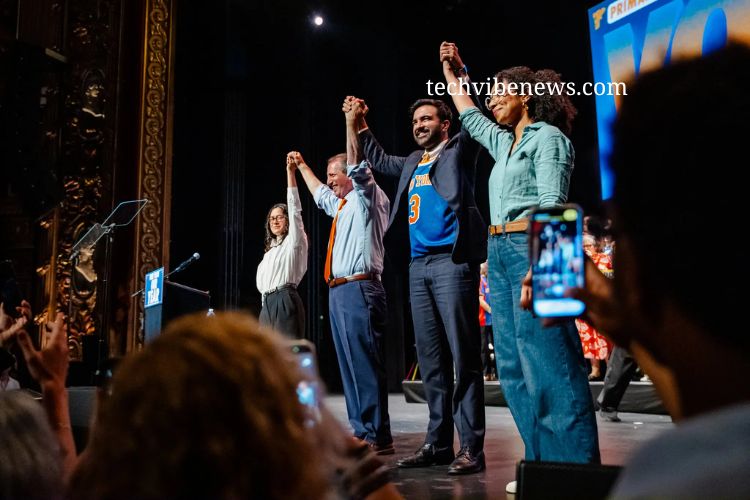
A year after Zohran Mamdani stunned New York politics with his unexpected Democratic primary victory for mayor, he has returned to the campaign trail with an ambitious and risky mission. Instead of focusing solely on his own administration, Mamdani is using his growing political influence to support fellow progressives in a series of closely watched primary races.
His latest political strategy could strengthen the Democratic left across New York—or seriously weaken his own position.
Mamdani and his allies are backing challengers against Democratic incumbents they believe have moved too close to corporate interests and positions they oppose on Israel. Their campaign extends beyond congressional contests, with efforts to influence another House race and increase the number of democratic socialists in the state legislature.
The stakes are enormous. A successful campaign could transform Mamdani from a rising progressive politician into one of New York’s most influential political power brokers. A series of defeats, however, could expose the limits of his influence and create serious problems for his administration.
Read More: Mike Kennedy and the Surprising Political Strategy Behind Passing Powerful Bills
Mamdani Bets Big on the Progressive Left
Mamdani’s political rise has already changed the conversation within New York’s Democratic Party. His unexpected primary victory demonstrated that a progressive candidate could challenge the traditional Democratic establishment and mobilize voters around an ambitious left-wing agenda.
Now, he is attempting to build on that momentum.
Rather than treating his mayoral victory as the end of his political campaign, Mamdani appears determined to use his platform to reshape the broader Democratic Party. His allies are targeting several incumbents and supporting candidates who share his progressive and democratic socialist vision.
The strategy carries a clear message: political influence should not end with winning one election. Mamdani wants to create a stronger network of elected officials who can advance similar policies at the city, state and federal levels.
That approach could give the progressive movement greater influence over future legislation, endorsements and party leadership.
A Direct Challenge to Democratic Incumbents
Among Mamdani’s most significant targets are Representatives Daniel Goldman and Adriano Espaillat. His allies argue that both lawmakers have become too closely aligned with corporate donors and positions that conflict with the priorities of the progressive movement.
Challenging established members of Congress is never easy. Incumbents typically possess strong fundraising networks, name recognition, experienced campaign organizations and deep relationships within their districts.
Mamdani’s involvement therefore represents a major escalation.
By putting his reputation behind challengers, he is effectively asking voters to reject established political figures in favor of candidates promising a stronger progressive agenda. If those challengers win, Mamdani could claim a major political victory and demonstrate that his movement can compete against deeply rooted Democratic organizations.
A loss, however, could send the opposite message.
The Rise of a Political Kingmaker
A successful election night could dramatically expand Mamdani’s influence.
At only 34, he has already established himself as an important figure within New York’s progressive movement. Helping relatively unknown candidates defeat experienced incumbents would elevate that reputation even further.
Such victories could establish Mamdani as a political kingmaker—someone capable of identifying, promoting and helping elect candidates who might otherwise struggle to gain attention.
That power would extend beyond endorsements.
Successful candidates could become allies in Congress and Albany, creating a broader political bloc capable of coordinating around issues such as housing, labor rights, economic inequality, healthcare and other progressive priorities.
For Mamdani, building that coalition could be as important as advancing individual candidates.
The Risks Could Be Just as Significant
Political influence, however, comes with a price.
Mamdani has placed considerable political capital behind these races, meaning the results could directly affect perceptions of his leadership. If several candidates fail to defeat their opponents, critics could argue that his influence has been exaggerated.
The timing makes the situation even more sensitive.
Mamdani is still early in his mayoral tenure. Instead of allowing his administration to establish itself before entering major political battles, he has chosen to become deeply involved in contests that could generate both winners and powerful enemies.
Repeated defeats could encourage Democratic leaders and political organizations to challenge him more aggressively. Opponents could portray his strategy as overly ambitious or disconnected from the priorities of New York voters.
For a mayor attempting to build political authority, that could become a serious liability.
Tensions With Former Allies
Perhaps the greatest danger for Mamdani is not simply losing elections. His aggressive strategy has already created tensions with some groups that previously supported his political rise.
Black and Latino progressives, influential labor unions and the left-leaning Working Families Party played important roles in helping Mamdani reach City Hall. Their relationships with the mayor could have provided him with a powerful political foundation.
His current campaign strategy has strained some of those relationships.
Several former allies believe Mamdani has crossed political lines by challenging candidates and organizations within the broader progressive coalition. Their concerns suggest that the left is far from politically unified.
The criticism becomes particularly significant when influential figures publicly question whether they can continue trusting him.
Such divisions could make it harder for Mamdani to maintain a broad coalition while governing New York City.
A Battle Over the Future of New York Democrats
The conflict surrounding Mamdani reflects a larger struggle inside the Democratic Party.
For years, New York Democrats have contained competing factions, including establishment politicians, labor organizations, moderates and increasingly powerful progressive groups. Mamdani’s rise has intensified the debate over which faction should shape the party’s future.
His campaign involvement represents an attempt to accelerate that transformation.
Progressives want greater influence over Democratic candidates, policy priorities and party leadership. Establishment figures, meanwhile, have strong incentives to defend their positions and political networks.
The primary elections have therefore become more than individual contests. They represent a broader battle over the direction of New York politics.
If Mamdani-backed candidates succeed, progressive Democrats could gain greater leverage across multiple levels of government. If they fail, the traditional Democratic establishment could regain confidence and use the results to challenge the momentum of the socialist movement.
The Democratic Socialist Movement Faces a Crucial Test
Mamdani’s strategy also places the broader democratic socialist movement under scrutiny.
His mayoral victory gave socialists an important breakthrough in one of the country’s most influential cities. But turning that breakthrough into lasting political power requires more than winning a single mayoral election.
It requires candidates, organizations, voters and elected officials who can maintain momentum over multiple election cycles.
That is why the current primaries matter so much.
Victories could demonstrate that progressive candidates can build successful campaigns beyond the mayoral race. They could also encourage more candidates to challenge established Democrats in future elections.
Defeats, on the other hand, could reveal that Mamdani’s electoral success remains difficult to reproduce in other districts.
A Defining Moment for Mamdani
The upcoming primary contests represent a defining moment for Mamdani’s political career.
A strong performance would strengthen his authority, expand his network and potentially establish him as one of the most influential progressive leaders in New York. It could also give democratic socialists greater representation and bargaining power across the state.
A poor performance would create a very different political narrative.
Opponents could portray Mamdani as a politician who expanded his ambitions too quickly. Former allies could become more distant, while Democratic leaders could become increasingly willing to challenge his agenda.
The results could therefore shape not only individual congressional and legislative races but also Mamdani’s reputation as a political leader.
What Comes Next for New York Politics?
Mamdani’s political gamble highlights the growing influence of the progressive left while exposing the divisions that continue to exist within it.
His willingness to challenge established Democrats shows that he is not interested in maintaining the political status quo. He wants to build a movement capable of influencing elections well beyond City Hall.
Whether that strategy succeeds will depend on voters.
If his preferred candidates win, Mamdani could emerge from the primary season with greater influence, a stronger political network and a clear path toward expanding the progressive movement. If they lose, his political opponents may seize the opportunity to weaken his influence and question his ability to shape elections beyond his own campaign.
Either way, Mamdani has made one thing clear: he intends to play an active role in determining the future of New York’s Democratic Party.
The coming election results will reveal whether that bold strategy becomes a powerful political breakthrough—or a costly gamble that leaves his coalition divided.
Frequently Asked Questions:
Who is Zohran Mamdani?
Zohran Mamdani is a New York politician and democratic socialist who rose to national attention through his progressive political agenda and growing influence within the Democratic Party.
Why is Mamdani making a high-stakes political bet?
Mamdani is using his political influence to support progressive candidates in key primary races, challenging established Democratic figures and attempting to strengthen the left-wing bloc.
Which Democratic incumbents are facing challenges backed by Mamdani?
Mamdani and his allies are supporting efforts to challenge Democratic Representatives Daniel Goldman and Adriano Espaillat, whom progressives criticize over their political positions and relationships with corporate interests.
What does Mamdani hope to achieve?
Mamdani aims to expand progressive and democratic socialist influence across New York politics by helping elect candidates who share his political priorities.
Why could these primary elections be important for Mamdani?
Successful candidates could strengthen Mamdani’s political network and establish him as a powerful kingmaker. Major defeats could weaken his influence and provide ammunition to his political opponents.
Why have some of Mamdani’s allies become frustrated with him?
Some progressive groups, labor organizations and political allies have criticized his decision to challenge established Democrats, creating tensions within the broader progressive coalition.
Could Mamdani become a political kingmaker?
Yes. If candidates he supports win competitive races, Mamdani could gain a reputation for successfully influencing elections and helping relatively lesser-known candidates defeat established politicians.
Conclusion
Zohran Mamdani’s decision to make a bold push for progressive candidates marks a critical moment in New York politics. By challenging established Democratic power and investing his political influence in congressional and state races, he is seeking to build a stronger and more influential left-wing coalition. The strategy carries both enormous opportunities and serious risks. Victories could establish Mamdani as a powerful political kingmaker, strengthen democratic socialist representation and reshape the future of New York’s Democratic Party. Losses, however, could weaken his influence, deepen tensions with former allies and give his opponents new momentum.